
How Did British Travelers Become Such a Valuable Customer Segment For French Retailers After Brexit?
On June 23, 2016, British voters chose to leave the European Union in a national referendum. Since January 1, 2021, when Brexit effectively came into force, the United Kingdom has been outside the EU single market, bringing an end to freedom of movement, introducing new customs formalities, and changing the status of UK nationals in relation to the EU. For the UK’s 69.5 million residents, these changes have meant additional hurdles when traveling and shopping in Europe.
But this new status has also brought an unexpected benefit: as non-EU residents, British travelers are now eligible for tax-free shopping, allowing them to claim a VAT refund on purchases intended for export. This side effect of Brexit has created a significant business opportunity for French retailers, particularly in the luxury sector, making British travelers an especially valuable customer segment. Five years after Brexit took effect, tax-free sales to British travelers have increased by 550%.
British Travelers Are the Second-Largest International Visitor Market in France
This development is part of a much broader trend: British tourism to France was already substantial. According to Tourism Economics/Oxford Economics data cited by Atout France, France’s national tourism development agency, British travelers rank second in terms of arrivals, with 13.1 million visitors, just behind Germany. This strong performance comes amid record international tourism overall: France welcomed 102 million international tourists in 2025, up from 100 million in 2024, which had already been a particularly strong year thanks to the Olympic Games.
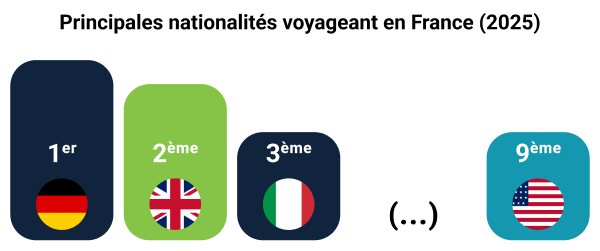
This volume is largely driven by France’s exceptional proximity to the UK. Paris is just 2 hours and 15 minutes from London by Eurostar, while cross-Channel ferry routes allow hundreds of thousands of British tourists to reach the Normandy and Brittany coasts each week. Air travel rounds out these options for destinations farther from Paris, such as the French Riviera and ski resorts.
Steady Growth Since Brexit
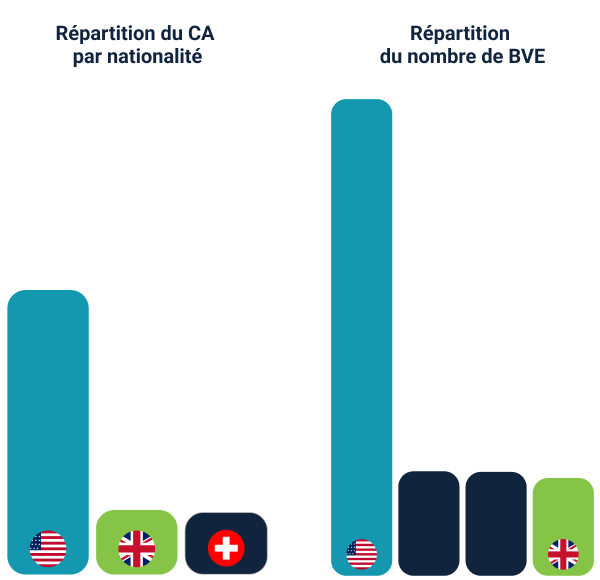
According to SolPay data, sales generated by British customers have increased 6.5-fold in five years, making British travelers the second-largest nationality by sales value, even though they rank only fourth in the number of tax-free forms issued—a position that has remained unchanged since 2023. In other words, British customers may be fewer in number than some other nationalities, but they spend significantly more.
To put this growth into perspective, a comparison with North American tourists is particularly revealing: historically the leading customer segment for tax-free shopping in France, they serve as a benchmark for the industry as a whole.
In 2025, the United States still maintained a substantial lead, generating more than four times the tax-free sales of British travelers, with 82,000 tourists compared with 18,000. But the gap is narrowing every year, while the purchasing patterns of the two customer groups differ significantly.
According to an Association of International Retail report cited by Euronews, British tax-free shopping expenditure in the European Union jumped from €169 million in 2021 to €854 million in 2024—nearly a fivefold increase in just three years. The report describes this as more than a passing trend, pointing to a genuine “new shopping tourism market” that is also benefiting the hospitality and restaurant sectors.
Meanwhile, UK luxury industry organization Walpole estimates that “UK luxury goods exports to the EU remain up to 43% below where they would have been without Brexit.” What Paris is gaining, London appears, at least in part, to be losing.
Ski Resorts, the French Riviera, and Paris: The Geography of British Shopping
British travelers’ shopping patterns throughout the year differ significantly from those of North American visitors. While the latter show a very pronounced peak during the summer, British visitor numbers are more evenly distributed throughout the year.
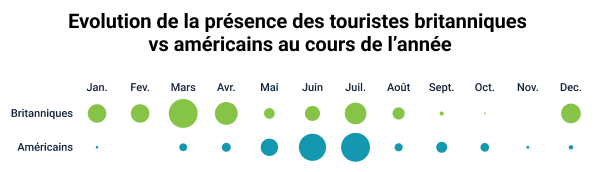
Two peaks nevertheless stand out: December through March, driven by year-end shopping and winter sports, and, to a lesser extent, July. Sporting goods sales therefore peak during the winter season—a distinctive pattern explained by the strong presence of British visitors in mountain resorts, where they actually generate more tax-free forms than Americans.
Geographically, the French Riviera ranks first, accounting for 35%, followed by Paris at 32% and mountain resorts at 29%. The South of France is also where British average transaction values are highest, reaching €1,000, driven by watch and jewelry purchases—well ahead of Paris at €538. The picture is very different for Americans: Paris accounts for more than half of their sales, while mountain resorts represent just 7%.
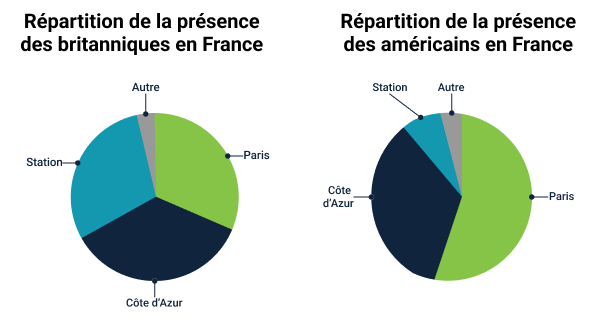
This geographic distribution is consistent with data published by Atout France in its 2025 review: with 13.1 million visitors, the United Kingdom remains France’s second-largest inbound tourism market. France remains the second-most popular vacation destination for British travelers and their top destination for ski trips. The agency also notes that British visitors were among the customer groups contributing to the year’s record performance, with France welcoming 102 million international tourists and generating €77.5 billion in tourism revenue, up 9% year over year.
Short Stays in Paris, Longer Ski Vacations: What Tax-Free Shopping Reveals About British Travelers
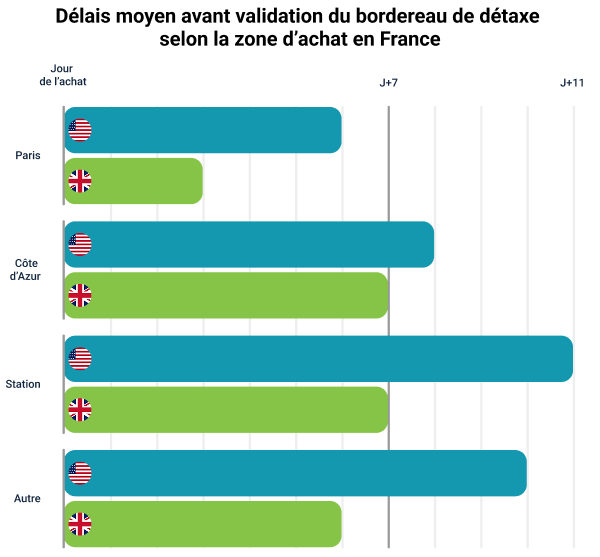
Overall, 60% of British travelers have their tax-free form validated by customs within one week of making their purchase.
This validation is a mandatory step in the tax-free shopping process: customs validation confirms that the purchased goods are leaving the European Union, a prerequisite for the traveler to receive a VAT refund. The time between purchase and validation can therefore serve as an indicator of travel patterns. The shorter the interval, the more likely it is to indicate a brief stay, with travelers validating their tax-free form shortly before leaving the EU. Conversely, a longer interval suggests an extended stay.
A closer look at these time frames reveals a more nuanced picture. In Paris, British travelers typically have their tax-free forms validated within three to four days. This is broadly in line with American visitors and reflects the short stays typical of city breaks. In the South of France and mountain resorts, however, the interval rises to seven or eight days, suggesting longer stays associated with ski vacations or extended summer getaways. This behavior is consistent with market data observed by Atout France, confirming that British travelers not only spend more, but also follow distinct travel patterns depending on their destination.
Among British Travelers, Age Is Not a Key Driver of Spending
Another notable difference between the two customer groups is the role of age. While spending among Americans is concentrated within a specific age range, British travelers spend much more consistently across age groups.
Among Americans, the pattern is more conventional: the average transaction value increases with age, peaking at €698 among 45-to-54-year-olds, with an almost identical level among 55-to-64-year-olds. At the other end of the spectrum, travelers under 24 have the lowest average transaction value, at just €368—nearly half the peak amount. Tourist purchasing power therefore remains concentrated among consumers in the middle and later stages of their careers.
Among British travelers, differences in average transaction value across age groups are far less pronounced. From age 25 onward, the average rises steadily, from €670 among 25-to-34-year-olds to €805 among those aged 65 and over. From travelers in their thirties to retirees, spending therefore remains consistently high, without the pronounced generational peak seen among American visitors.
This appetite for spending across most working-age groups is also reflected in a 2025 study published by Altiant: British consumers expect to increase their travel spending by 30%, compared with 23% among Americans. This supports the view that tourism spending among British travelers is less dependent on age than it is among their American counterparts.
Conclusion
These figures point less to a short-lived post-Brexit windfall than to a lasting reshaping of luxury shopping flows across Europe—one from which France continues to benefit.
While British travelers rank second in terms of arrivals in France and the United States ranks ninth, Americans still maintain a substantial lead in tax-free shopping, both in the number of tax-free forms issued and in sales value. Nevertheless, the gap continues to narrow year after year, and the rise of British travelers to become the second-largest nationality by sales value as early as 2026 suggests that this momentum is far from over.
Frequently asked questions
Find answers to all your questions.
-
Can tax-free really boost my store’s revenue?
Yes. For international shoppers, tax-free is a powerful purchase trigger. By reducing the perceived price, it facilitates the sale of high-value products, increases the average basket, and strengthens the appeal of your point of sale to non-resident travelers.
-
How can I promote tax-free shopping to my international customers?
By making it visible and announcing it simply. SolPay supports you with communication materials adapted to the store and clear messaging for your teams. Result: your customers immediately understand the advantage, and tax-free shopping becomes a dedicated sales argument.
-
Does tax-free shopping represent a cost for my store?
No. SolPay solutions are 100% free for the retailer. You pay no commission on your sales. Remuneration applies only to the VAT effectively refunded to the traveler.
-
Does tax-free shopping impact checkout fluidity?
On the contrary. Integrated into your tools, tax-free shopping does not slow down checkout. With mobile or off-register solutions, your teams can manage tax-free without creating waiting times, even during peak periods.
-
What happens after the form is validated by the customer at customs?
Once the form is validated, SolPay takes over: tracking validations, administrative management, customer refund, and handling any potential requests. You have no additional management to ensure after the sale.
-
How can I ensure a tax-free form is compliant?
Compliance relies on the accuracy of the information entered.
Verify that the sale information (amount, quantity, ex-VAT amounts, inclusive-VAT amounts, description of goods) and the customer’s information are accurate and consistent. If you have any questions, our customer service is available 6 days a week. -
What types of products can I offer tax-free in my store under French regulations?
The majority of goods sold in-store can qualify for tax-free: fashion, accessories, leather goods, watches, jewelry, perfumery, premium, or non-food products.
The essential requirement is that the goods must be new, unused, and intended for export outside the European Union. -
Is there a minimum purchase amount in France to issue a tax-free form?
🇫🇷 In France, the legal minimum amount is set at €100.01 including VAT per store per day.
🇧🇪 In Belgium, the legal minimum amount is set at €125.01 including VAT per store per day.As soon as this threshold is reached, you can offer tax-free shopping to your eligible customer, in full compliance.
-
Is training provided for my sales team?
Yes. Our sales representatives can travel for in-person training with your teams (Paris, South, Rhône-Alpes). In other regions, training is provided remotely (by phone or video conference). SolPay tools are designed to be quickly adopted, even by teams unfamiliar with tax-free shopping. A simple session validates best practices and quickly makes your teams autonomous.
-
Does tax-free shopping complicate daily management for my teams?
No. With SolPay solutions, tax-free shopping is integrated into the sales process. Information retrieval is automated, forms are generated quickly, and your teams remain focused on what matters most: customer relationship and sales.
Latest news
-
Resources

Weddings in france: what if tax-free shopping also had a place on the big day?
WEDDINGS IN FRANCE: WHAT IF TAX-FREE SHOPPING ALSO HAD A PLACE ON THE BIG DAY? France has always held a special place in the world of weddings and elegance. Designer dresses, custom-made suits, jewelry, shoes, accessories, floral arrangements… French expertise attracts international customers looking for unique pieces to celebrate one of the most important moments…
-
Article
How Did British Travelers Become Such a Valuable Customer Segment For French Retailers After Brexit?
For French retailers, particularly in the luxury sector, Brexit has turned into a significant business opportunity. Five years later, the result is striking: tax-free sales have increased by 550%.
-
Article

Duty Free vs. Tax Free: What’s the Difference?
The terms duty free and tax free are often confused by international travelers. However, these two systems operate differently and apply to different shopping situations.
-
Article
Why Fashion Retail Stores Have Everything to Gain from Tax-Free Shopping
France remains one of the world’s premier shopping destinations, with fashion standing out as one of its greatest attractions. For international travelers who reside outside the European Union, shopping in France means access to exceptional craftsmanship, iconic brands—and one significant advantage: tax-free shopping.
-
Article

Tax-Free Shopping in Pharmacies: An Overlooked Growth Opportunity
In recent years, French pharmacies have become tourist attractions in their own right. From Paris to the French Riviera, they are drawing countless international visitors. On TikTok, the hashtag #FrenchPharmacies has generated millions of views, turning pharmacies and parapharmacies into symbols of French wellness and beauty.
-
Customer stories
How Histoires de Parfums Modernized Tax Refunds in Its Boutique Thanks to Shopify POS
With an international clientele representing between 50% and 75% of its business, the checkout experience is a key part of the customer journey.